Electrical and Electronics Engineering
Why Choose EEE at ACE?
The Department of Electrical and Electronics Engineering (EEE) was established in 2007 with an initial intake of 60 students. Backed by strong academic leadership and a vision to nurture future-ready engineers, the department has consistently focused on building both foundational and industry-relevant competencies.
Accredited by the National Board of Accreditation (NBA) in 2015, 2018, and re-accredited in 2021, the department also benefits from ACE Engineering College’s NAAC ‘A’ Grade status and Autonomous recognition. The curriculum is designed to blend core EEE concepts with emerging technologies such as Electric Vehicles, Solar Energy, IoT, Power Electronics, and Smart Grid Systems.
Students are supported through placement-oriented training programmes in CRT, RPA, Salesforce, PEGA, and Vihaan, alongside academic learning. A strong emphasis is placed on communication, problem-solving, and critical thinking skills. The department fosters a research-driven environment through student projects, conferences, technical expos, and industry collaborations. With experienced faculty and robust infrastructure, the EEE department continues to shape competent professionals equipped for global challenges.
Accreditation


Vision & Mission

Our Vision
To be a leading technical center to achieve international standards in the areas of education, research and services and to develop the students with engineering professional attitude, equipped with a strong technical foundation required for critical reasoning, analytical and technical skills to face global challenges to succeed competitive examinations and to promote creative environment for developing young entrepreneurs with social- concern.Our Mission
- Quality Technical Education to young Engineers by providing state-of-the-art laboratories
- Preparing them for competitive examinations in higher education.
- Employment with cognizant professional attitude, research aptitude, life-long learning, entrepreneurial practices, ethical values and social concern.
- Promotion of lifelong learning, entrepreneurial practices, ethical values, and social responsibility.
Curriculum Syllabus
ACE R20 Regulation
ACE R22 Regulation
Program Education Objectives
Program Specific Outcomes (PSOs)
- Prepare students to succeed in competitive examinations for higher education and employment.
- Equip students with the latest skills in industry-relevant technologies for real-time applications.
- Contribute to smart power grid development and green energy integration for societal impact.
Program Outcomes (POs)
- Engineering Knowledge: Apply knowledge of mathematics, natural science, computing, engineering fundamentals and an engineering specialization to develop solutions for complex engineering problems.
- Problem Analysis: Identify, formulate, and analyse complex engineering problems through in-depth research and critical thinking.
- Design/Development of Solutions: Design systems and processes that address engineering problems while considering safety, environmental, and societal factors.
- Conduct Investigations of Complex Problems: Use research-based knowledge and experiments to derive data-driven conclusions.
- Engineering Tool Usage: Apply modern tools and software for simulation, modelling, and testing electrical systems.
- The Engineer and the World: Analyse the societal and environmental impact of engineering solutions and uphold sustainability principles.
- Ethics: Commit to professional ethics, human values, and inclusivity in all engineering practices.
- Individual and Team Work: Work effectively in diverse teams and multidisciplinary environments, both as a leader and contributor.
- Communication: Communicate clearly and professionally through reports, presentations, and documentation.
- Project Management and Finance: Apply engineering and management principles for effective project execution and team coordination.
- Life-long Learning: Demonstrate adaptability to new technologies and a commitment to continuous professional development.
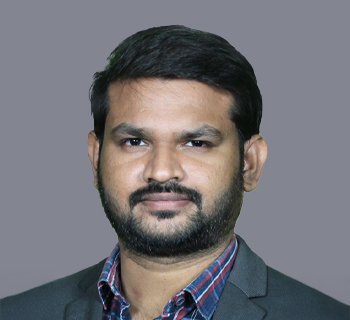
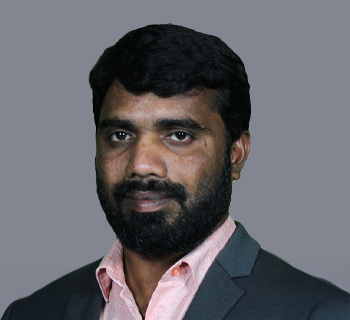
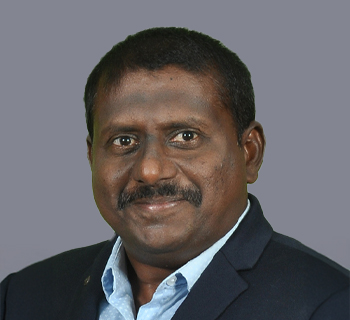
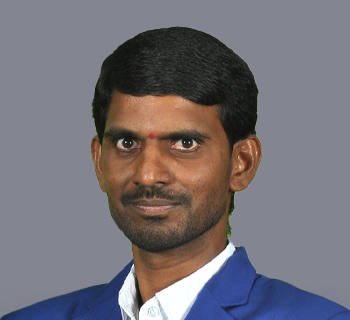
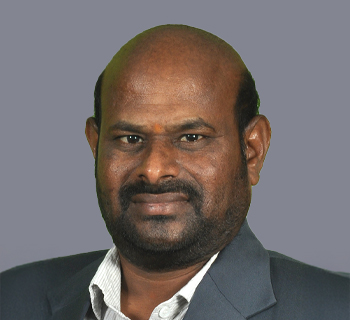
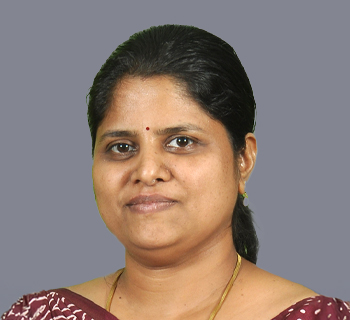
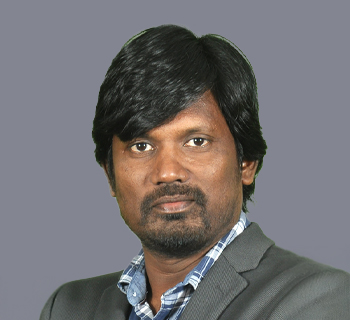
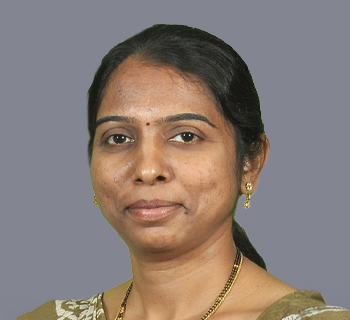
Faculty & Research



Infrastructure & Labs
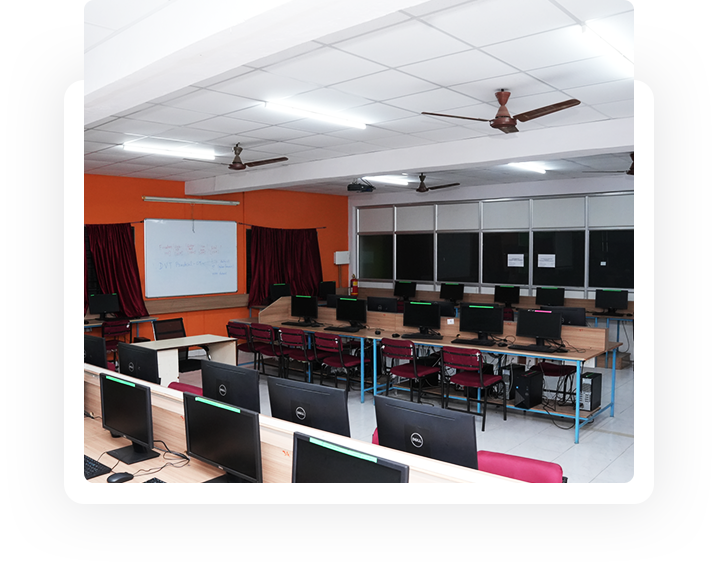
All classrooms are smart-enabled with LCD projectors, smart boards, and CCTV monitoring. The department also maintains an exclusive library with textbooks and reference materials relevant to EEE.The department boasts robust lab infrastructure and dedicated resources to support practical and project-based learning:
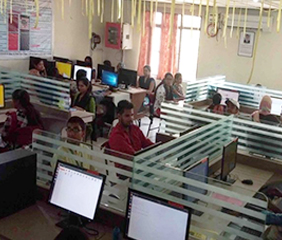
Basic Electrical Engineering Lab
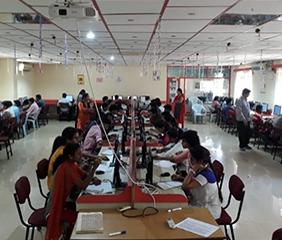
Principles of Electrical and Electronics Engineering Lab
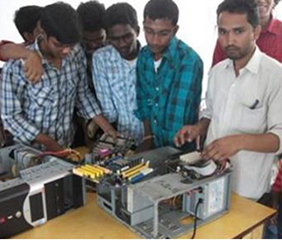
Electrical Circuits Lab (I & II)
AC and DC Machines Labs
Power Systems Lab
Electrical Simulation Lab (equipped with MATLAB, PSCAD, PSpice, ECAD, LabVIEW, SolarPro, and more)

92+
Campus Interviews Conducted

156+
Campus Interviews Conducted

31+
Campus Interviews Conducted

500+
Campus Interviews Conducted
Our Tap Recuiters







Advisory Board Members
Head of the Department
Dr. Samanthaka Mani Kuchibhatla
Assoc. Prof. & HOD of EEE Dept.Senior Faculty Members
Dr. Shaik Abdul Ahad Professor
MemberMr. B .S Krishna Varma, Assoc. Prof.
MemberDr. Miska Prasad Assoc. Prof.
MemberMrs.Rajitha Kasarla Asst. Prof.
Member
Mr. M. Raja Shekar, Assoc. Prof.
MemberFaculty Members
Ms.Arrekkal Sunantha
MemberMr. Hanumantha Rao Kandula
MemberMr.Goutam Barma
MemberMs. J. Malavika
MemberMs. Venkata Swathi Gaddamanugu
MemberMr. Harikranth Budida
MemberStudents
K.Ramesh
IV EEEU.Parsharamudu
III EEECh.Rajesh
IV EEEB.Prashanth
III EEEParents
B.Murali Krishna
TeacherU.Kasim
BusinessmenAlumni
Mr.B.Abhilash
EntrepreneurMr.Sai Krishna
Associate Engineer,QualcomProfessional Bodies Members
Dr. S. Srinivas Rao
Professor, EEE Dept. NIT WarangalMrs. C. Swapna.
Assistant Engineer TSGENCO, VIDYUTHSOUDHA Hyd.Employers
Mr.A.Srikanth Reddy
Project Manager, CYNO HUB,HydMr.A.Sathish Kumar, MD
Surya Tech solutions Hyd.Roll Of Honour

P. Narendar Reddy
H : No : 22AG5A0203
BATCH : 2021-2025

Porkuri Ajay
H : No : 21AG5A0204
BATCH : 2020-2024

Martha Sravani
H : No : 20AG5A0201
BATCH : 2019-2023

Peddavittannagari Uday Kiran
H : No : 19AG5A0205
BATCH : 2018-2022
Pankaj Jain
H : No : 17AG1A0245
BATCH : 2017-2021
Bejugam Dinesha
H : No : 16AG1A0205
BATCH : 2016-2020
Nellula Swathi Menon
H : No : 15AG1A0223
BATCH : 2015-2019
K. Kavya Reddy
H : No : 14AG1A0232
BATCH : 2014-2018
Surakanti Bhargavi
H : No : 13AG1A0277
BATCH : 2013-2017
M Harika
H : No : 11AG1A0203
BATCH : 2011-2015
Baraiya Divya Patel
H : No : 12AG1A0234
BATCH : 2012-2016
Mundra Sowmya
H : No : 10AG1A0237
BATCH : 2010-2014
Mosali Teja
H : No : 09AG1A0240
BATCH : 2009-2013
Naga Yasasvi Puvvada
H : No : 12AG1A0234
BATCH : 2008-2012
S.Varuni
H : No : 07AG1A0246
BATCH : 2007-2011
Events & Activities
No upcoming events found.